 Arthya
Hidden credit card benefits most people never use
20 October 2026

A credit card is easy to treat as a way to pay, plus a few points. Quieter value often sits in a benefits sheet that arrived with the card and then vanished into a drawer. Lounge visits, a fuel surcharge waiver, purchase protection, monthly instalments, milestone rewards, and dining offers are six examples. None of them belongs to every card, and none of them works if the terms stay unread.
Banks and card networks already publish these benefits. What follows is general. Your issuer’s page, and your Most Important Terms and Conditions, are the documents that apply to you.
A lounge visit has a ceiling
Many cards include time in an airport lounge, usually through a card-network programme or a partner the issuer names. The visit is often limited to you, to lounges on a published list, and to a number that resets each quarter or year. A guest, a shower, or food beyond what the lounge includes can still be billed. The desk may ask for a boarding pass and for the same card that carries the benefit. A full lounge can turn you away.
Visa publishes an airport lounge access programme for eligible cards in India. Who qualifies, and which lounges take part, are set there and in your issuer’s schedule. Both can change without a fresh email. Before a trip, open those two pages. A number you remember from the day you applied is stale until you see it written down again.
A fuel waiver is separate from the surcharge
Paying for fuel on a card can add a surcharge on top of the pump price. On RuPay, the National Payments Corporation of India has told members that an acquirer may levy a fuel surcharge on credit-card fuel transactions, capped at 1% of the authorisation amount plus GST. That cap is in NPCI’s circular of 23 October 2025. It is a rule about what may be charged on that network. It does not mean your bank will return the money. Other networks set their own rules, and the circular can be revised, so read NPCI’s copy.
A waiver, when your issuer offers one, is a separate benefit. It usually has a monthly ceiling, sometimes a minimum spend, and it often leaves the tax on the surcharge with you. Points may also be switched off for fuel. Search your card’s benefits for “fuel” and note the ceiling. If the page is silent, treat that as no waiver until the issuer says otherwise.
Purchase protection is a claim
Some cards cover an item bought on the card if it is damaged or stolen within a short window, or they extend the maker’s warranty. There is usually a deadline, a list of excluded goods, a cap, and a rule that the whole purchase went on that card. The exclusions live in your certificate, not in a general article.
The Reserve Bank of India’s credit card directions say the Most Important Terms and Conditions should mention available insurance cover, if any, and when it starts. The current commercial-bank text is the Reserve Bank of India (Commercial Banks – Credit Cards and Debit Cards: Issuance and Conduct) Directions, 2025, updated as on 1 October 2026, and it is revised from time to time. If cover is listed, save the claim contact beside the number you use to block the card.
EMI is a second price
A large purchase can be turned into equated monthly instalments, or EMI. That can ease one month. It can also add interest, a processing fee, and GST on those charges. The monthly figure on a shop’s screen is the size of each payment, which is a poor stand-in for the price.
RBI’s directions require the issuer to show the principal, the interest, and any upfront discount from the merchant or the issuer — the part that makes a plan look like “no cost” — before you convert. The same split has to appear on the statement. A conversion that still includes interest is not to be presented as zero-interest or no-cost. If you might close early, look for a foreclosure charge first. Then set the instalment total beside the total for paying the statement in full.
Milestones follow spend you already planned
Some cards set spend thresholds. Cross one, and you may get bonus points, a fee waiver, or a voucher. The count is usually eligible retail spend. Fees, cash withdrawals, refunds, and excluded categories often sit outside it, and a refund can drop you back under the line. The window might be a quarter, a membership year, or a period defined only in the schedule.
Copy the thresholds from the document once. Then leave them until a purchase you were already going to make would cross a line. Extra spending, done only to unlock a voucher, turns the benefit into a cost. There is no universal threshold, only the one printed for your card.
Dining offers are built to end
A dining offer is usually a short campaign: a discount, a dish, or extra points at listed restaurants, often on set days, and only if the eligible card pays the bill. The terms sit under the banner — minimum bill, cap, excluded outlets, end date. Check the issuer’s own offers page on the day. A figure from a chat group stays unverified until it appears there. If you cannot find the terms that day, leave the offer out of the decision.
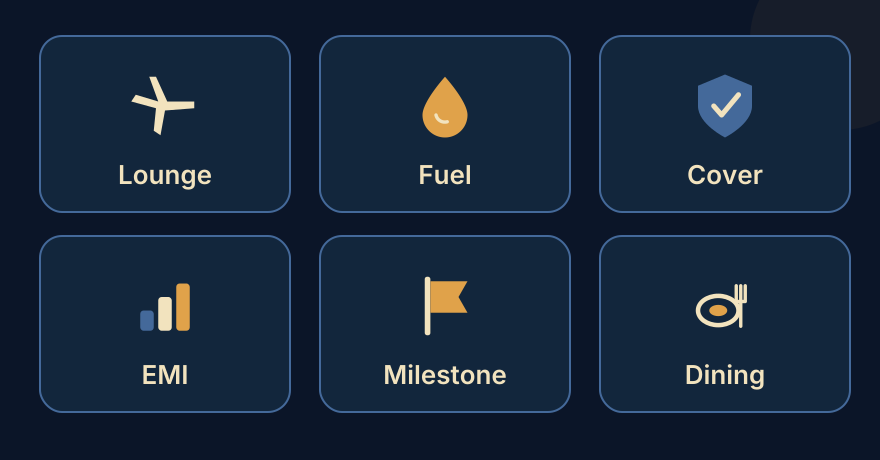
A check that fits on a card
Once a year, open the benefits document rather than the advertisement you applied with. Before a flight, fuel stop, gadget, instalment plan, or meal, check the cap and the end date that apply that day.
None of this promises you will spend less. Benefits are capped and revised. With the terms open, they are simply value that was already published. To choose among cards you hold, see how to pick the right card for each purchase. To read the contract summary, see how to read your benefits and the MITC. A blank list of categories is what your card actually gives you.
Sources
Disclaimer
This article is for general information only. It is not financial, legal, or tax advice, and it is not a recommendation to apply for, keep, or close any card. Card benefits, fees, and terms are set by the issuer and the card network, and they change often. Verify them with your bank, and read your own Most Important Terms and Conditions, before you rely on them. Arthya is not affiliated with or endorsed by any bank or card network. All trademarks belong to their owners.