 Arthya
New Paytm–AU RuPay credit card: what “lifetime free” covers and what to check
22 October 2026
On 21 October 2026, Paytm published a note about a new RuPay credit card. AU Small Finance Bank issues it. The note calls the card lifetime free. Here is what that covers, and what else to read before you apply.
The details below come from three places, as they stood on 22 October 2026: Paytm’s note, Paytm’s apply page, and AU Small Finance Bank’s own page for the card. Pages change. If one looks different when you open it, follow the live page.
What “lifetime free” covers
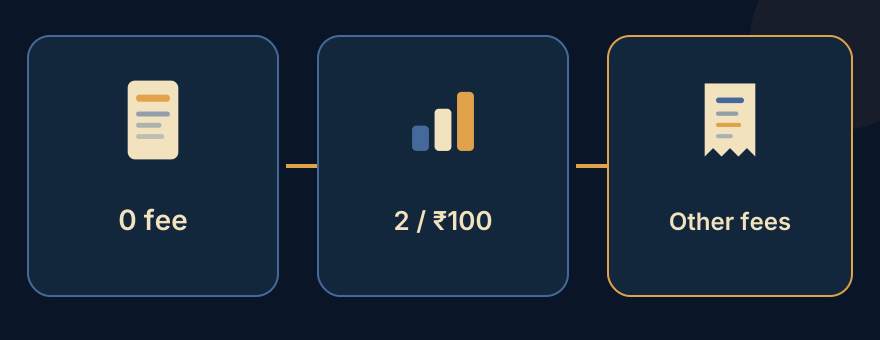
On the 21 October note, on the apply page, and on the bank’s page, lifetime free means there is no joining fee and no annual fee.
The apply page also lists other charges, for situations that are not the annual fee. A cash withdrawal is 2.5 per cent of the amount, or a minimum of ₹500. A late payment is listed as 15 per cent of the total amount due, from a minimum of ₹10 to a maximum of ₹1,300. Going over the limit is listed as 2.5 per cent of the over-limit amount, with a minimum of ₹500. A purchase in a foreign currency is listed at up to 3.5 per cent, plus applicable taxes. Read these on the fee answer. When the bank gives you a key fact statement, that copy is the one for your card.
How the reward rates are written
All three pages use the same headline rates. Eligible Paytm UPI spends earn up to 2 per cent. Paytm Travel bookings and Paytm Gold purchases earn 5 per cent. The apply page also shows a line for 1 per cent on recharges, bill payments, and more.
In the rewards answer, Paytm says you earn up to 2 per cent on UPI payments in the Paytm app, 5 per cent on bus, train, and flight bookings, and 5 per cent on digital gold bought in the app. It says 1 reward point equals ₹1.
The bank’s page splits the UPI rate into steps. A Paytm UPI payment from ₹100 to ₹2,000 earns 2 reward points per ₹100. A Paytm UPI payment above ₹2,000 earns 1 reward point per ₹100. A UPI payment in another app earns 1 reward point per ₹400. On that page, 1 point equals ₹1 when you redeem it for Paytm Gold, and ₹0.50 when you redeem it in other categories.
Two points on ₹100, redeemed at ₹1, come to ₹2. That is the “up to 2 per cent.” Redeemed at ₹0.50, the same points come to ₹1. Travel and gold stay at the stated 5 per cent. Confirm the points rule for those on the card’s own terms.
Lounge access starts with a booking
On these pages, a lounge visit comes with a flight you book. Paytm’s apply page says you can use up to four lounge visits on a round trip of ₹5,000 or more, booked through Paytm Travel, and up to 12 visits in a year. The 21 October note says up to four family members can go in together, and that entry is by a QR code.
The bank’s page adds the day-to-day details. The visits it describes are at domestic airport lounges. The QR is created after the round-trip booking. Once that QR is created, it cannot be cancelled. The minimum booking for one lounge QR is ₹5,000.
Fuel is a separate benefit. The apply page says there is a 1 per cent fuel-surcharge waiver at fuel stations in India. That answer does not give a spend range or a rupee cap. The bank’s page states 1 per cent on fuel transactions from ₹400 to ₹5,000, with a maximum of ₹250 in a statement cycle. If the live pages do not match, follow the bank’s page, and then the terms on your card.
Who can apply, and the sheet to read
AU Small Finance Bank says its eligibility criteria are only a guide, and that it may approve or decline an application. On its page, a salaried primary cardholder is 21 to 60. A self-employed applicant is 25 to 65. An add-on cardholder is over 18. You need to live in India.
Paytm’s apply page says a primary applicant is 21 to 60, an add-on cardholder is at least 18, and the minimum monthly income is ₹25,000. It says your credit score and your work both matter, and it describes a score of 720 or above as generally strong, without setting that figure as a cutoff. Treat the bank’s criteria as a guide. The application states the rule for you.
AU Small Finance Bank is a small finance bank. The Reserve Bank’s directions for small finance banks on credit and debit cards, updated as on 1 October 2026, are the conduct rules for issuers of that kind. They ask the issuer to give you a one-page key fact statement and the most important terms and conditions. Those documents set out interest, fees, and how the card works. A calm way to read one sheet is in how to read your card’s benefits and the MITC.
Paying with this card inside a UPI app is a credit-card payment. Paying from a bank account is a different payment. That difference is in the article on the UPI merchant charge.
A short list before you apply
Check that the joining fee and the annual fee are shown as zero. Read the cash-advance, late-payment, over-limit, and foreign-currency lines. For rewards, note the app, the ₹2,000 step, and whether a point is redeemed at ₹1 or at ₹0.50. For the lounge, look for a Paytm Travel round trip of at least ₹5,000. When the key fact statement arrives, use that in place of this summary.
Sources
Disclaimer
This article is for general information only. It is not financial, legal, or tax advice, and it is not a recommendation to apply for, keep, or close any card. Card benefits, fees, and terms are set by the issuer and the card network, and they change often. Verify them with your bank, and read your own Most Important Terms and Conditions, before you rely on them. Arthya is not affiliated with or endorsed by any bank or card network. All trademarks belong to their owners.