 Arthya
The repo rate moved on 7 October. Your card rate may not have.
20 October 2026

On 7 October 2026 the Reserve Bank of India published the resolution of its Monetary Policy Committee. The committee met from 5 to 7 October 2026. The meeting was chaired by Governor Sanjay Malhotra. It voted unanimously to raise the policy repo rate under the liquidity adjustment facility by 25 basis points, to 5.50 per cent. With that, the standing deposit facility rate stands at 5.25 per cent. The marginal standing facility rate and the Bank Rate stand at 5.75 per cent.
The committee also changed the stance to calibrated tightening. Dr Nagesh Kumar and Prof. Ram Singh preferred that the stance remain neutral. The resolution says the new stance signals that, in the conditions the committee described, rate cuts are off the table in the near term, and the next policy action can be a rate increase or a pause. The minutes are to be published on 21 October 2026. The next meeting is scheduled for 2 to 4 December 2026.
That paragraph is about the policy rate. It is not a sentence about the annual percentage rate printed on a credit card. A repo rate is the rate at which the Reserve Bank provides liquidity to banks. A card rate is a price in the agreement between you and the issuer. An issuer can later choose to change what it charges. The two numbers do not move together merely because a press release used 25 basis points. This article does not say that any card’s interest, any equated monthly instalment, or any minimum amount due rose by 25 basis points on 7 October. It does not name an issuer. If a charge on your card changes, the place to read that change is a notice from the issuer.
The card rules were already written down
How an issuer presents interest, and how it may change a charge, sits in a different Reserve Bank document. The Reserve Bank of India (Commercial Banks – Credit Cards and Debit Cards: Issuance and Conduct) Directions, 2025, updated as on 1 October 2026, are the standing conduct rules for commercial banks. The 1 October date is the update of those directions. It is not the 7 October rate decision. Read them as two papers. If a summary and the current PDF disagree, use the PDF.
Under those directions, the most important terms must explain the interest-free period, with examples. That period is suspended if any balance from the previous month’s bill is still outstanding. Carrying part of last month’s bill can mean new purchases start to attract finance charges. Paying the statement in full is what keeps the interest-free window. Paying only the minimum amount due is a different act. It keeps the account from being treated as unpaid. It does not clear the bill. The directions require a warning that paying only the minimum can stretch repayment over months or years, with interest compounded on the balance.
Issuers also have to quote the annualised percentage rate where it differs. A shop purchase and a cash advance are the usual example, and the workings are meant to be shown. The rate and the annual fee are to appear with equal prominence, including in the welcome kit and on statements. If you want the number your card charges today, that illustration on your own sheet is the number. The 5.50 per cent repo rate is not a substitute for it.
A change in charges has its own clock
Changes in charges are prospective. The directions say they need at least one month’s notice, and that they apply going forward. A message that arrives this week, if one arrives, should be read for the date it takes effect. Adding 0.25 percentage points to the rate on your current statement, because the policy rate moved, is not what the resolution asks you to do. Wait until the issuer writes the new figure down.
The directions also say that if a change in charges disadvantages you, you may surrender the card without an extra closure charge, once dues are paid. That is a right described in the conduct rules. It is not a reason, by itself, to close a card because the repo rate moved. Read the current PDF before you act on it. The practical reading order is set out in how to read your card’s benefits and the MITC. A merchant charge on some UPI payments runs on a different clock, in the UPI merchant charge is waiting until after Diwali.
Nothing in the 7 October resolution sets a lounge visit, a reward point, a fuel waiver, or a festive offer. Those are issuer and network terms. A higher policy rate does not, by itself, remove a benefit, and it does not keep a benefit in place. Open the benefits file and note the date on it.
A short order for this statement
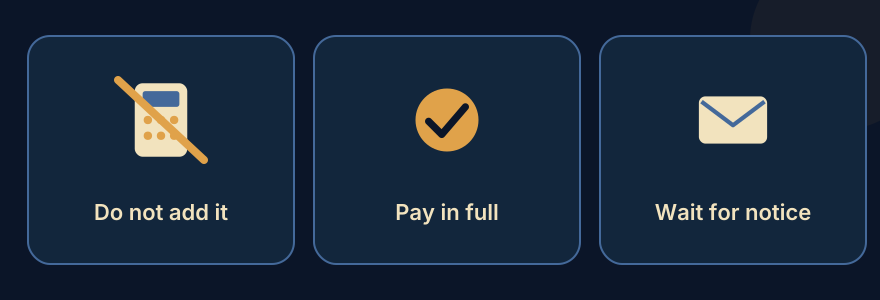
First, leave the rate on the statement as the issuer printed it, unless a notice addressed to you states a new one. Second, if you want the interest-free period, pay the full amount due by the due date, including anything still open from the previous bill. Third, if a notice of a change in charges does arrive, compare its start date with the one-month rule in the directions. Fourth, leave an instalment plan and the minimum amount due where the card agreement put them, until that notice says otherwise.
The committee will publish minutes on 21 October 2026. Those minutes may say more about how members thought about prices and growth. They will still not be your card agreement. When they appear, read them as monetary policy. When your issuer writes to you, read that letter as the card. The resolution of 7 October is the source for the 5.50 per cent. The directions updated on 1 October are the source for how a card charge is shown, and for how a later change has to be told to you.
Sources
Disclaimer
This article is for general information only. It is not financial, legal, or tax advice, and it is not a recommendation to apply for, keep, or close any card. Card benefits, fees, and terms are set by the issuer and the card network, and they change often. Verify them with your bank, and read your own Most Important Terms and Conditions, before you rely on them. Arthya is not affiliated with or endorsed by any bank or card network. All trademarks belong to their owners.